

Carbon black pigmento, a well - known and widely used material in the pigment industry, has long been recognized for its excellent coloring properties. As a leading supplier of carbon black pigmento, we often receive inquiries about its potential use in conductive applications. In this blog, we will delve into the science behind carbon black pigmento and explore whether it can indeed be used in conductive applications.
Understanding Carbon Black Pigmento
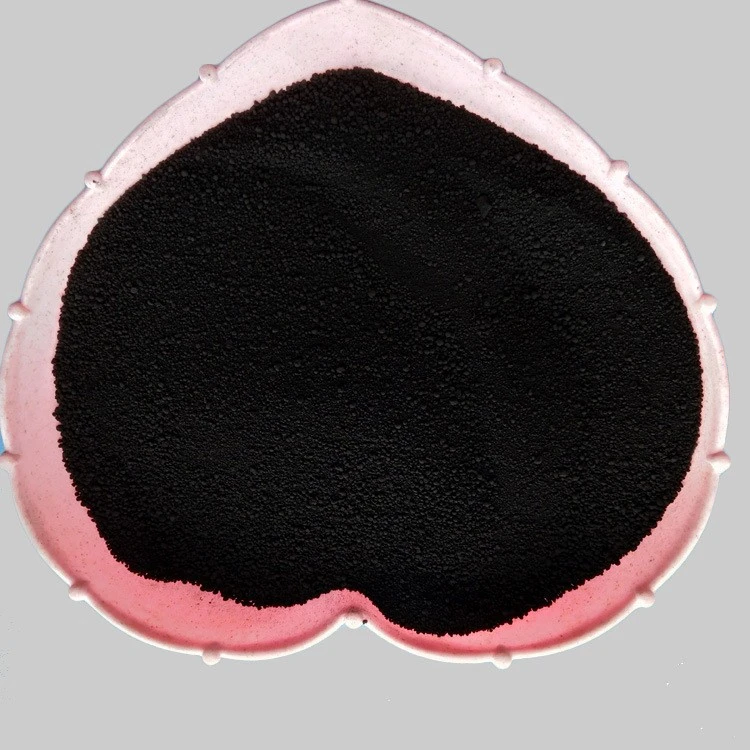
Carbon black pigmento is a form of paracrystalline carbon that is produced by the incomplete combustion or thermal decomposition of hydrocarbons. It consists of extremely fine particles with a high surface area, which gives it its characteristic black color and excellent tinting strength. There are different types of carbon black pigmento, each with unique properties depending on the production method and raw materials used.
One of the most common types of carbon black pigmento used in the industry is Black Pigment for Resin. This type of pigment is specially formulated for use in resin - based applications. It provides a deep, rich black color and good dispersion in the resin matrix, making it ideal for various plastic and coating applications.
Another popular variant is Black Pearl Pigment. With its unique spherical particle structure and high - surface - area characteristics, Black Pearl Pigment offers both excellent color properties and potential for other beneficial effects, such as enhanced mechanical properties in some composites.
Ci Pigment Black 7 is also a well - defined carbon black pigment. It is widely used in the coloring of various polymers, printing inks, and paints due to its consistent quality and colorfastness.
The Conductive Mechanism of Carbon Black
Carbon black can exhibit electrical conductivity due to its unique structure. The carbon atoms in carbon black form a network of micro - and nanostructures. These structures can allow the movement of electrons, which is the basis of electrical conductivity.
When carbon black particles are dispersed in a matrix such as a polymer, they can form a conductive pathway. As the concentration of carbon black increases, the probability of the particles coming into contact with each other increases, creating a continuous network that can conduct electricity. The electrical conductivity of a carbon - black - filled composite is influenced by several factors, including the type of carbon black, its particle size, surface area, structure, and the degree of dispersion in the matrix.
For example, high - structure carbon blacks tend to form more extensive conductive networks compared to low - structure ones. High - structure carbon blacks have a more complex, branched structure, which allows for better inter - particle connectivity. Smaller particle size carbon blacks also generally provide better conductivity because they have a larger surface area and can more easily form a continuous conductive path.
Applications of Carbon Black in Conductive Situations
- Antistatic Packaging
Antistatic packaging is crucial in industries where electronic components are handled. Static electricity can cause damage to sensitive electronic devices. Carbon - black - filled polymers are used to make antistatic packaging materials such as bags, trays, and boxes. The carbon black in these materials dissipates the static charge, preventing electrostatic discharge (ESD) events. Our carbon black pigmento, with its potential for good conductivity at appropriate loadings, can be an excellent choice for such applications. - Electromagnetic Interference (EMI) Shielding
In the modern world, there is a high density of electronic devices, which can generate electromagnetic interference. EMI can disrupt the normal operation of other electronic equipment. Carbon - black - based composites can be used as EMI shielding materials. When incorporated into plastics or rubbers, carbon black can absorb and reflect electromagnetic waves, reducing EMI in various electronic enclosures and components. - Conductive Polymers for Printed Circuit Boards (PCBs)
The development of conductive polymers using carbon black as a filler has opened up new possibilities for printed circuit boards. Although traditional PCBs mainly use copper for conduction, carbon - black - filled polymers can provide an alternative, especially for flexible and low - cost PCBs. Carbon black can provide the necessary electrical conductivity while offering the flexibility and ease of processing associated with polymers.
Factors Affecting the Use of Carbon Black Pigmento in Conductive Applications
- Dispersion Quality
Achieving a good dispersion of carbon black pigmento in the matrix is crucial for conductivity. Poor dispersion can lead to the formation of agglomerates, which reduce the efficiency of the conductive pathway. Advanced dispersion techniques, such as high - shear mixing or the use of dispersing agents, are often required to ensure a homogeneous distribution of carbon black particles in the polymer matrix. - Concentration
The concentration of carbon black in the matrix is a critical factor. There is a percolation threshold, which is the minimum concentration of carbon black required to form a continuous conductive network. Below this threshold, the conductivity is very low. As the concentration increases beyond the percolation threshold, the conductivity increases rapidly, but there are also practical limitations. Too high a concentration can lead to changes in the mechanical properties of the composite, such as reduced flexibility and increased brittleness. - Interaction with the Matrix
The interaction between carbon black and the polymer matrix can also affect conductivity. Some polymers may have poor compatibility with carbon black, which can lead to phase separation and reduced conductivity. Surface treatment of carbon black or the use of coupling agents can improve the interaction between carbon black and the matrix and enhance the overall performance of the conductive composite.
Our Offerings as a Carbon Black Pigmento Supplier
As a reliable carbon black pigmento supplier, we understand the importance of providing high - quality products for conductive applications. Our carbon black pigmento products are carefully engineered to offer the right balance of color properties and conductivity potential. We have a range of products with different particle sizes, structures, and surface chemistries to meet the diverse needs of our customers.
We also provide technical support to help our customers optimize the use of our carbon black pigmento in conductive applications. Our team of experts can assist in selecting the most suitable product, recommended dispersion methods, and achieving the desired conductivity levels while maintaining the mechanical and physical properties of the final composite.
Conclusion
In conclusion, carbon black pigmento can indeed be used in conductive applications. Its unique structure and electrical conductivity mechanisms make it a versatile material for various industries, from electronics to packaging. However, achieving the desired conductivity requires careful consideration of factors such as dispersion, concentration, and matrix interaction.
If you are interested in exploring the use of carbon black pigmento in your conductive applications, we invite you to contact us for further discussions. Our experienced team is ready to assist you in selecting the best - fitting products for your specific needs. We look forward to the opportunity to collaborate with you and contribute to the success of your projects.

References
- "Carbon Black: Science and Technology" by Donnet, Jean - B., and Robert C. Bansal.
- "Electrical Conductivity of Polymer Composites Filled with Carbon Black" in Journal of Composite Materials, various issues.
- "Advances in Conductive Polymer Nanocomposites" edited by Raju Thomas and Sabu Thomas.