

Does N110 Carbon Black have environmental impacts?
As a supplier of N110 Carbon Black, I am often asked about the environmental implications of this widely - used industrial material. N110 Carbon Black, a highly versatile product with excellent reinforcement properties, is commonly utilized in the rubber industry, particularly for tire manufacturing, as well as in various other fields such as plastics, inks, and coatings.
Understanding N110 Carbon Black
To comprehensively evaluate the environmental impact of N110 Carbon Black, it's essential to first understand what it is. N110 Carbon Black belongs to the furnace black family and is characterized by its relatively small particle size and high surface area. These properties give it exceptional reinforcing capabilities, which are highly sought - after in industrial applications.
It is produced through the incomplete combustion or thermal decomposition of hydrocarbons in a furnace, such as natural gas or heavy oil. The production process is carefully controlled to achieve the desired particle characteristics and properties of the carbon black.
Environmental Impacts in Production
The production of N110 Carbon Black has some inevitable environmental footprints. One of the main concerns is the emission of pollutants during the manufacturing process. When hydrocarbons are burned or thermally decomposed to form carbon black, they release several types of air pollutants. These include particulate matter (PM), sulfur dioxide (SO₂), nitrogen oxides (NOₓ), and carbon monoxide (CO).
Particulate matter can have serious impacts on human health. Fine particulate matter (PM2.5) can penetrate deep into the lungs, causing respiratory problems and exacerbating existing conditions such as asthma and chronic obstructive pulmonary disease (COPD). Sulfur dioxide is a major contributor to acid rain, which can damage ecosystems, including forests, lakes, and soils. Nitrogen oxides not only contribute to acid rain but also play a role in the formation of ground - level ozone, a harmful air pollutant that can cause eye irritation, respiratory discomfort, and reduced lung function.
Moreover, the energy consumption in the production of N110 Carbon Black is substantial. The furnace process typically requires high temperatures, which are usually achieved through the combustion of fossil fuels. This heavy reliance on fossil fuels contributes to greenhouse gas emissions, particularly carbon dioxide (CO₂). In an era of increasing concern about climate change, the carbon footprint of carbon black production has become a significant issue.
However, it's important to note that the carbon black industry has been making significant efforts to address these environmental issues. Modern production facilities are equipped with advanced air pollution control technologies, such as scrubbers and filters, to reduce the emission of pollutants. For instance, electrostatic precipitators can effectively capture particulate matter, while selective catalytic reduction systems can reduce nitrogen oxide emissions.
Environmental Impacts during Use
During its use, N110 Carbon Black generally has relatively low direct environmental impacts. In rubber products like tires, it is incorporated into the material matrix and does not readily leach out under normal conditions. Tires are designed to be durable, and the carbon black serves to improve their mechanical properties, such as abrasion resistance, tear strength, and tread wear.
In the plastics and ink industries, N110 Carbon Black is used as a colorant and reinforcing filler. Similar to the rubber application, it remains stable within the product structure. This stability means that it is less likely to cause environmental contamination compared to some other chemicals.
However, when products containing N110 Carbon Black reach the end - of - life stage, appropriate handling is crucial. For example, waste tires can be a significant environmental issue if not properly managed. Stockpiled waste tires can become breeding grounds for pests, such as mosquitoes, and pose a fire hazard. Once burned, they can release large amounts of pollutants, including carbon black particles, polycyclic aromatic hydrocarbons (PAHs), and heavy metals.
Comparison with Other Carbon Blacks
It's also interesting to compare N110 Carbon Black with other types of carbon blacks, like Carbon Black N339 and Carbon Black 330. Each type of carbon black has its own unique set of environmental characteristics based on its production process and application areas.
Carbon Black N339 has a different particle size and structure compared to N110. Generally, it is used in applications where a balance between reinforcement and processability is required. In terms of production - related environmental impacts, it may have similar emission profiles to N110, but the specific pollutant levels can vary depending on the production technology employed by different manufacturers.
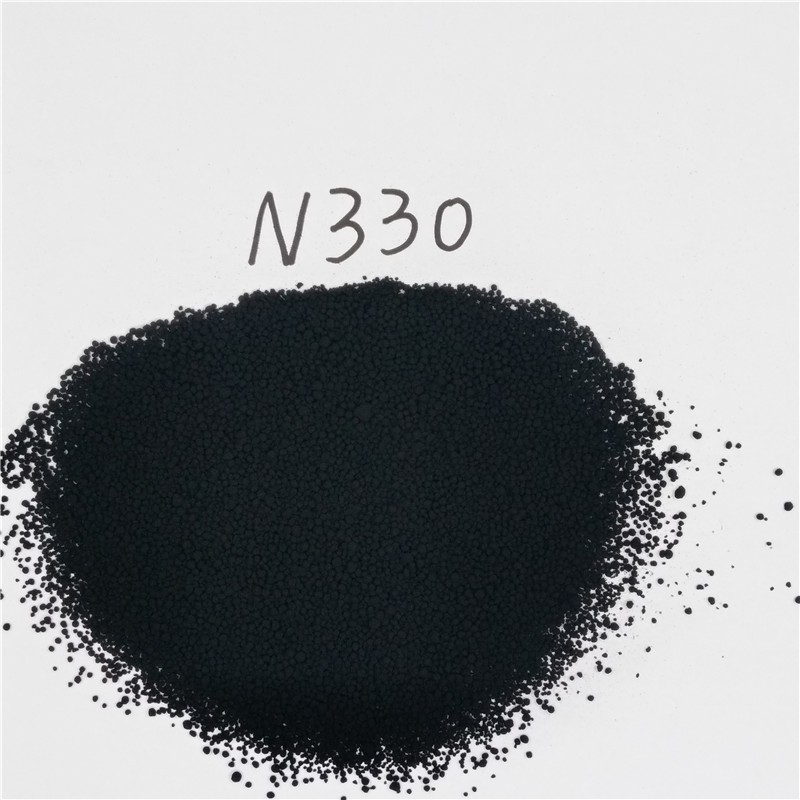
Carbon Black 330 is another widely - used type. It has a relatively coarser particle size compared to N110. The coarser particles may result in a slightly different combustion behavior during production, potentially affecting the amount and type of pollutants emitted.
Meanwhile, Non Conductive Carbon Black is mainly used in applications where electrical insulation properties are required. Its production and environmental impacts also depend on the specific manufacturing methods, but in general, the principles of emission control and waste management are similar to those of other carbon blacks.
Mitigating Environmental Impacts
As a responsible supplier of N110 Carbon Black, my company is committed to minimizing the environmental impacts associated with our product. We invest in research and development to optimize the production process, with the goal of reducing energy consumption and pollutant emissions. This includes exploring alternative raw materials and process technologies that are more environmentally friendly.
In addition, we actively support the proper end - of - life management of products containing N110 Carbon Black. We encourage our customers to recycle and reuse rubber and plastic products to reduce waste generation. For example, waste tires can be recycled into rubber crumbs, which can be used in various applications such as playground surfaces, running tracks, and asphalt modification.
Encouraging Sustainable Sourcing and Usage
We also advocate for sustainable sourcing of raw materials for carbon black production. As mentioned earlier, the traditional production of carbon black often relies on fossil - derived hydrocarbons. By exploring renewable and sustainable feedstocks, such as biomass - derived hydrocarbons, we can reduce the carbon footprint of our product.

On the user side, we provide our customers with guidance on the optimal use of N110 Carbon Black. This includes ensuring the right dosage and proper mixing in their manufacturing processes. Using the right amount of carbon black not only ensures the quality of the final product but also reduces waste and unnecessary resource consumption.
Conclusion
In conclusion, N110 Carbon Black does have some environmental impacts, mainly in the production stage with regard to air pollution and energy consumption, and in the end - of - life phase in terms of waste management. However, with the continuous efforts of the carbon black industry, significant progress has been made in reducing these impacts.
As a supplier, we are dedicated to further improving the environmental performance of our N110 Carbon Black. We believe that through innovation, collaboration with customers, and responsible waste management, we can strike a balance between the economic benefits of using N110 Carbon Black and its environmental implications.
If you are interested in procuring N110 Carbon Black or have further questions about its environmental aspects, we welcome you to contact us for a detailed discussion. Our team of experts is ready to assist you in making an informed decision.
References
- "Carbon Black: Production, Properties, and Applications", Volume 1 - advances in Chemistry Series (1978)
- "Environmental and Health Impacts of Carbon Black Production and Use", a report by an environmental research organization.
- Journals on industrial material research such as Carbon - Journal of Carbon Research.