

As a black pigment supplier deeply entrenched in the industry, I am frequently confronted with the question: Is black pigment biodegradable? This query is not only relevant in the context of environmental sustainability but also has far - reaching implications for various industries that rely on black pigments. In this blog, I will delve into the science behind black pigments and their biodegradability, drawing on my experience and knowledge as a supplier.
Understanding Black Pigments
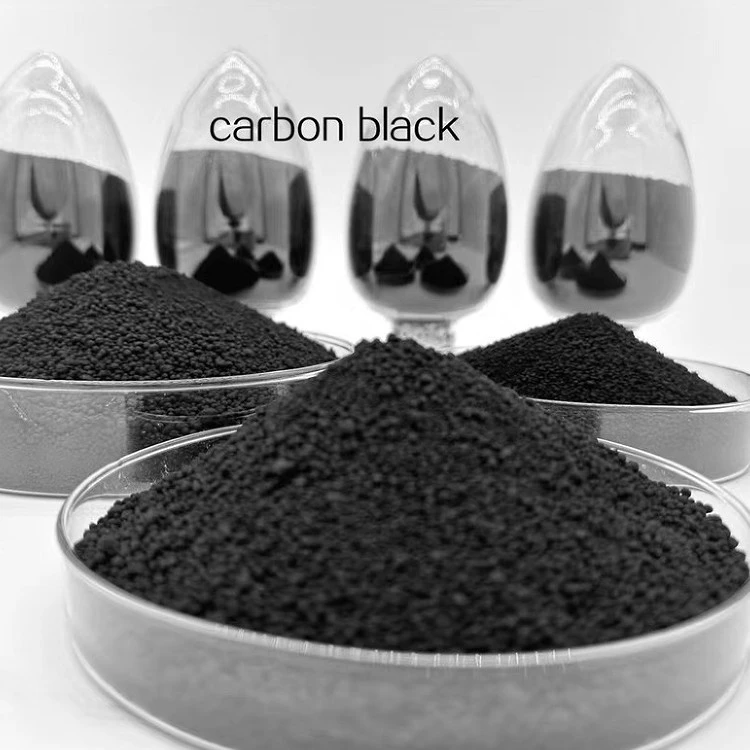
Black pigments come in a variety of forms, each with its own unique properties and applications. One of the most common types is carbon black. Carbon black is a fine powder produced by the incomplete combustion or thermal decomposition of hydrocarbons. It has a wide range of uses, from rubber reinforcement to coloring plastics, inks, and coatings.
Ci Pigment Black 7 is a specific type of carbon black pigment. It is known for its high tinting strength, excellent dispersibility, and good lightfastness. This makes it a popular choice in many industrial applications, including the production of high - quality inks and coatings.
Another form is Carbon Black Pigment Powder, which is used in a diverse range of products. The powder can be easily incorporated into different matrices, providing a deep black color. Its properties can be tailored depending on the manufacturing process, such as the particle size and surface area, which affect its performance in various applications.
Carbon Black Pigment for Plastics is specially formulated to meet the requirements of the plastics industry. It offers UV protection, which helps to prevent the degradation of plastics when exposed to sunlight. This type of pigment also enhances the mechanical properties of plastics, making them more durable.
Biodegradability of Black Pigments
The concept of biodegradability refers to the ability of a substance to be broken down by living organisms, such as bacteria, fungi, or algae, into simpler compounds. When it comes to black pigments, especially carbon black, the answer regarding biodegradability is complex.
Carbon black is composed primarily of elemental carbon. In its pure form, carbon is a very stable element and is not easily degraded by biological processes. The carbon atoms in carbon black are arranged in a highly ordered or disordered structure, depending on the manufacturing process. This structure makes it resistant to the enzymatic action of microorganisms.
However, the biodegradability of carbon black can be influenced by several factors. One of the key factors is the surface chemistry of the carbon black particles. If the surface of the carbon black is modified with functional groups, it may become more susceptible to biodegradation. For example, some studies have shown that carbon black with oxygen - containing functional groups on its surface can be more readily attacked by certain microorganisms.
Another factor is the particle size. Smaller particles have a larger surface - to - volume ratio, which means that there is more surface area available for interaction with microorganisms. In theory, smaller carbon black particles may be more likely to be degraded than larger ones, although this also depends on the specific microbial environment.
In addition, the presence of other substances in the pigment formulation can affect biodegradability. For instance, if the black pigment is used in a coating or a plastic matrix, the overall biodegradability of the product will depend on the biodegradability of the matrix material as well. If the matrix is biodegradable, it may provide a more favorable environment for the degradation of the pigment.
Environmental Impact and Regulations
The question of biodegradability is closely linked to the environmental impact of black pigments. Non - biodegradable pigments can accumulate in the environment over time, potentially causing long - term problems. For example, carbon black particles can be released into the air during the manufacturing process or when products containing the pigment are worn or disposed of. These particles can contribute to air pollution and may have adverse health effects on humans and animals.
In response to environmental concerns, there are various regulations in place regarding the use and disposal of pigments. For example, in the European Union, the REACH (Registration, Evaluation, Authorization, and Restriction of Chemicals) regulation aims to ensure the safe use of chemicals, including pigments. This regulation requires manufacturers to provide information on the properties and potential hazards of their products, including their biodegradability.
In the United States, the Environmental Protection Agency (EPA) also has regulations governing the use of pigments in different industries. These regulations are designed to protect the environment and human health by limiting the release of harmful substances into the air, water, and soil.
Applications and Biodegradability Considerations
In different applications, the biodegradability of black pigments may have different levels of importance.
In the food packaging industry, there is a growing demand for biodegradable materials. While black pigments are not typically used directly in contact with food, they may be used in the outer packaging. In this case, using biodegradable pigments can help to reduce the environmental impact of the packaging waste.
In the textile industry, black pigments are used for dyeing and printing. Biodegradable pigments can be an attractive option for sustainable fashion brands, as they can contribute to the overall environmental friendliness of the products.
In the construction industry, black pigments are used in concrete and asphalt for coloring and UV protection. The long - term environmental impact of non - biodegradable pigments in these applications needs to be carefully considered, especially as the construction materials can have a long lifespan and may eventually end up in landfills.
Future Directions
As the demand for sustainable products continues to grow, there is a need for research and development in the area of biodegradable black pigments. Scientists are exploring new ways to modify carbon black or develop alternative black pigments that are more environmentally friendly.

One approach is to use natural sources of black pigments. For example, some plant - based materials can be used to produce black pigments. These natural pigments are often biodegradable and have a lower environmental impact compared to synthetic carbon black.
Another approach is to improve the biodegradability of carbon black through surface modification techniques. By introducing functional groups that are more easily recognized and degraded by microorganisms, it may be possible to make carbon black more biodegradable.
Contact for Procurement
If you are in the market for high - quality black pigments, whether it is Ci Pigment Black 7, Carbon Black Pigment Powder, or Carbon Black Pigment for Plastics, I invite you to contact me for procurement discussions. We can explore the best options for your specific application, taking into account factors such as color, performance, and environmental impact.
References
- ASTM International. (2019). Standard Terminology Relating to Carbon Black. ASTM D1765 - 19.
- European Chemicals Agency. (2020). REACH Regulation (EC) No 1907/2006.
- Environmental Protection Agency. (2021). Chemicals and Toxics. Retrieved from [EPA website].
- Niu, J., & Zhang, X. (2018). Surface modification of carbon black and its application in polymer composites. Progress in Polymer Science, 81, 1 - 27.