

Hey there! As a supplier of black carbon colour, I've been diving deep into how this stuff affects the Earth's energy balance. It's a super interesting topic, and I'm excited to share what I've learned with you.
Let's start with what black carbon is. Black carbon is a form of particulate matter that's mainly produced from incomplete combustion of fossil fuels, biofuels, and biomass. You can find it in things like soot, and it's one of the most light - absorbing substances in the atmosphere.

So, how does it mess with the Earth's energy balance? Well, the Earth's energy balance is all about the balance between the incoming solar radiation and the outgoing thermal radiation. When sunlight hits the Earth, some of it is reflected back into space, and some is absorbed by the Earth's surface and atmosphere. This absorbed energy warms up the planet.
Black carbon plays a big role in this process because of its colour. You know how a black T - shirt gets really hot in the sun? That's because black absorbs a lot of light and heat. The same goes for black carbon in the atmosphere. It absorbs solar radiation very efficiently. When black carbon particles are floating around in the air, they soak up sunlight, which warms the surrounding air. This is different from other aerosols, like sulfate aerosols, which tend to reflect sunlight and cool the atmosphere.
Once black carbon is in the atmosphere, it can stay there for a relatively short time, usually from a few days to a few weeks. But during that time, it can have a significant impact. It can change the temperature profile of the atmosphere, which in turn affects weather patterns and cloud formation. For example, warmer air near the surface can lead to more evaporation, which can increase cloud cover. But it's not that simple. The type of clouds formed can either trap more heat (like low - lying clouds) or reflect more sunlight (like high - altitude clouds).
Black carbon also has a direct impact on snow and ice. When black carbon particles land on snow and ice surfaces, they darken the surface. You see, fresh snow and ice are really good at reflecting sunlight. But when they're covered with black carbon, they become less reflective. This means that more sunlight is absorbed by the snow and ice, which makes them melt faster. This is a huge problem in places like the Arctic, where the melting of ice is contributing to rising sea levels and changes in the ecosystem.
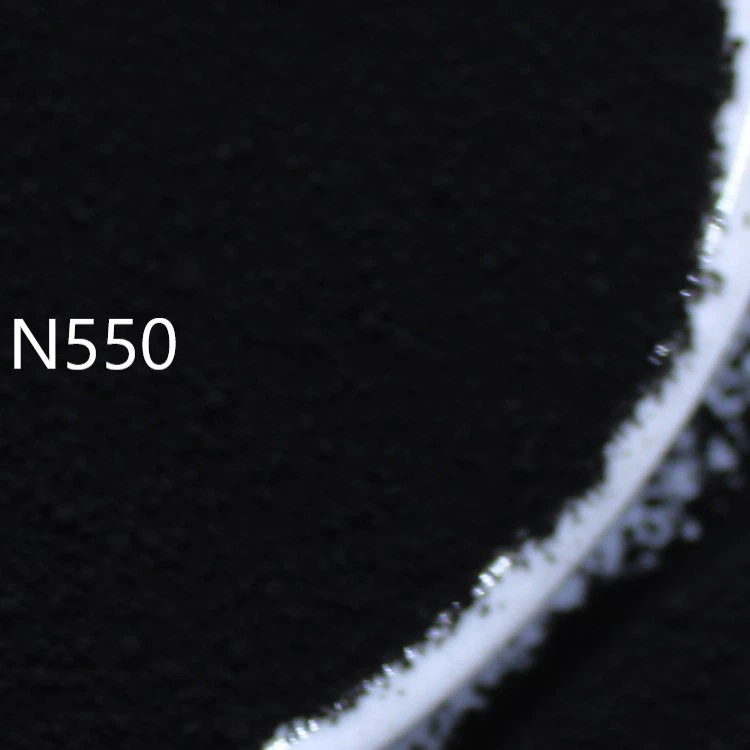
Now, let's talk a bit about the products we supply. We offer a range of black carbon products with different properties. For example, if you're interested in the Carbon Black N550 Use, it has specific characteristics that make it suitable for certain applications. It's commonly used in the rubber industry, where it can improve the strength and durability of rubber products.
Our ASTM Carbon Black meets the standards set by the American Society for Testing and Materials. This means that it has consistent quality and performance, which is crucial for industries that rely on precise specifications. Whether you're using it in plastics, inks, or coatings, you can trust that our ASTM - compliant black carbon will do the job right.
And then there's Carbon Black Dye. It's a great option if you need a high - quality black colourant. It can be used in a variety of applications, from textile dyeing to automotive paints. The unique properties of our black carbon dye ensure a rich, long - lasting black colour.
But we're not just about supplying products. We're also committed to understanding the environmental impact of black carbon. We know that while black carbon has many useful applications, its presence in the atmosphere can have negative consequences for the planet. That's why we're constantly researching and looking for ways to reduce the environmental footprint of our products.
For example, we're working on developing more efficient production processes that produce less black carbon emissions. We're also exploring ways to recycle and reuse black carbon waste. By doing this, we can not only minimize the amount of black carbon released into the environment but also reduce the overall cost of production.
Now, if you're in the market for black carbon colour products, we'd love to hear from you. Whether you're a small - scale manufacturer or a large industrial company, we have the products and expertise to meet your needs. We can offer competitive prices, high - quality products, and excellent customer service.
If you're interested in learning more about our products or have any questions, feel free to reach out. We're here to help you find the right black carbon solution for your business. Let's work together to make the most of this versatile material while also being mindful of its impact on the Earth's energy balance.
In conclusion, black carbon is a fascinating substance with both positive and negative aspects. Its ability to absorb light and heat can have a significant impact on the Earth's energy balance, but at the same time, it has many valuable industrial applications. By understanding its properties and taking steps to mitigate its environmental impact, we can ensure a sustainable future for both our business and the planet.
References
Bond, T. C., Doherty, S. J., Fahey, D. W., Forster, P. M., Berntsen, T., DeAngelo, B. J., ... & Zhang, H. (2013). Bounding the role of black carbon in the climate system: A scientific assessment. Journal of Geophysical Research: Atmospheres, 118(11), 5380 - 5552.
Jacobson, M. Z. (2001). Strong radiative heating due to the mixing state of black carbon in atmospheric aerosols. Nature, 409(6821), 695 - 697.
Ramanathan, V., & Carmichael, G. (2008). Global and regional climate changes due to black carbon. Nature Geoscience, 1(4), 221 - 227.