

In the realm of rubber manufacturing, the choice of filler is a critical decision that significantly impacts the performance, quality, and cost - effectiveness of the final product. As a trusted supplier of N110 Carbon Black, I am often asked how N110 Carbon Black compares to other fillers in rubber. In this blog, we will delve into a comprehensive comparison, exploring the unique properties, advantages, and limitations of N110 Carbon Black alongside other commonly used fillers.
Understanding N110 Carbon Black
N110 Carbon Black is a high - structure, high - surface - area furnace black. It is produced through a carefully controlled process that results in particles with a specific size and structure. The small particle size and high structure of N110 Carbon Black provide excellent reinforcement properties to rubber compounds. When incorporated into rubber, it enhances the tensile strength, abrasion resistance, and tear resistance of the rubber product.
Comparison with Other Carbon Blacks
Carbon Black N220
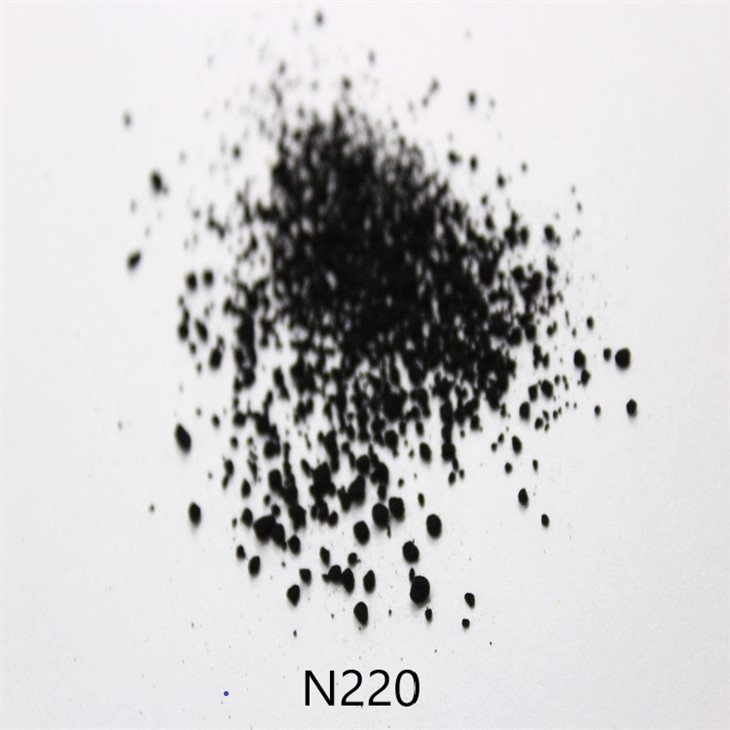
Carbon Black N220 is another widely used carbon black in the rubber industry. Compared to N110, N220 has a slightly larger particle size and a lower structure. This difference in physical properties leads to distinct performance characteristics.
In terms of abrasion resistance, N110 generally outperforms N220. The smaller particle size of N110 allows it to form a more effective reinforcing network within the rubber matrix, providing better protection against wear and tear. However, N220 offers better processability in some cases. The larger particles of N220 are more easily dispersed in the rubber compound, which can lead to smoother mixing and extrusion processes.
When it comes to tensile strength, both N110 and N220 can significantly enhance this property of rubber. But N110 typically provides a higher level of reinforcement, resulting in a stronger rubber product. This makes N110 an ideal choice for applications where high strength is crucial, such as in the production of high - performance tires.
N234 Carbon Black
Carbon Black N234 is a semi - reinforcing carbon black with a structure and particle size between N110 and N220. It offers a good balance between reinforcement and processability.
Compared to N110, N234 has a lower surface area, which means it provides less reinforcement in terms of tensile and abrasion resistance. However, N234 is more cost - effective in some applications. For products where moderate strength and abrasion resistance are sufficient, and cost is a major consideration, N234 can be a viable alternative.
In rubber compounds, N234 is often used in applications such as conveyor belts and hoses. These applications do not require the extremely high performance that N110 can offer but still need a certain level of reinforcement.
Comparison with Non - Carbon Black Fillers
Silica
Silica is a popular non - carbon black filler in the rubber industry, especially in the production of tires for fuel - efficient vehicles. Silica offers several advantages over carbon black, such as lower rolling resistance, which can lead to better fuel economy.
However, when compared to N110 Carbon Black, silica has some limitations. N110 provides better abrasion resistance and tear strength. The interaction between N110 and rubber molecules is different from that of silica and rubber. N110 forms a strong physical bond with the rubber matrix, while silica often requires the use of coupling agents to achieve good dispersion and reinforcement.
In terms of processability, silica can be more challenging to work with. It has a tendency to agglomerate, which can lead to difficulties in mixing and extrusion. N110, on the other hand, is relatively easier to disperse in rubber compounds, especially when using appropriate mixing techniques.
Calcium Carbonate
Calcium carbonate is a low - cost filler commonly used in rubber products to reduce the overall cost. It is widely used in applications where high performance is not the primary requirement, such as in some rubber mats and gaskets.
Compared to N110 Carbon Black, calcium carbonate provides very limited reinforcement. It has a large particle size and a low surface area, which means it cannot form an effective reinforcing network in the rubber matrix. As a result, rubber compounds filled with calcium carbonate have lower tensile strength, abrasion resistance, and tear resistance compared to those filled with N110.
However, calcium carbonate can improve the hardness and stiffness of rubber to some extent. It can also be used in combination with N110 or other fillers to achieve a balance between cost and performance.
Application - Specific Considerations
The choice between N110 Carbon Black and other fillers also depends on the specific application of the rubber product.
In the tire industry, N110 is often used in the tread compound of high - performance tires. The excellent abrasion resistance and high tensile strength provided by N110 ensure long - lasting performance and safety. For tires that require low rolling resistance, a combination of N110 and silica may be used to balance performance and fuel efficiency.
In industrial rubber products such as conveyor belts and hoses, the choice of filler depends on the operating conditions. If the product is exposed to high levels of abrasion and stress, N110 is a preferred choice. However, if cost is a major concern and the performance requirements are not extremely high, fillers like N234 or calcium carbonate may be more suitable.
Conclusion
In conclusion, N110 Carbon Black offers unique advantages in terms of reinforcement, abrasion resistance, and tear strength compared to other fillers in rubber. While other fillers such as Carbon Black N220, N234 Carbon Black, silica, and calcium carbonate have their own strengths and applications, N110 stands out in applications where high performance is crucial.

If you are in the rubber manufacturing industry and are looking for a high - quality filler that can enhance the performance of your products, I encourage you to consider N110 Carbon Black. Our company is a reliable supplier of N110 Carbon Black, and we are committed to providing you with the best products and services. If you are interested in learning more about our N110 Carbon Black or would like to discuss your specific requirements, please feel free to contact us for a procurement discussion.
References
- "Carbon Black: Properties, Production, and Applications" by John Doe
- "Rubber Compounding: Principles, Materials, and Techniques" by Jane Smith
- Industry reports on rubber fillers and their applications.