

Shanxi Sanqiang New Energy Science and Technology Co., Ltd. is a modern enterprise with more than 40 years of history. It takes coaltar as the raw material to produce carbon black and other chemical products. The company covers an area of 1000 acres (or 666,667m2) with 1200 employees and a total asset of over 1.5 billion yuan.With world-class production technologies and equipment, Sanqiang's production lines are all equipped with the DCS intelligent control system, which is jointly developed with SUPCON. This system helps to form a green, low-carbon circular economy industry chain, integrating carbon black, fine chemical industry and tail gas power generation, so as to realize intelligent, high-end, green and integrated production. For six consecutive years, Sanqiang has been selected into theTop Ten List of China's carbon black industry.
Our certifications
The company has passed the standards of IATF16949 Automotive Quality Management System, iso9001 Quality Management System, ISO14001 Environmental Management System, iso45001 Occupational Health and Safety Management System, the Energy Management System, Integrated Management System of Informatization and Industrialization, Intellectual Property Management System, etc.
Production Market
Italy, UK, Turkey, Egypt, Thailand, Vietnam, Malaysia, Philippines, Korea, India, Sri Lanka etc. We have supplied TOP 10 tyre and rubber compound enterprised in China.
Factory Strength
The company covers an area of more than 810 acres, has 860 employees, total carbon black capacity of 480,000 mtons, annual output of 400,000 tons of coal tar refining, the annual output of 120,000 tons of naphthalic anhydride, annual output of 20,000 tons of crude phenol refining, annual output of 4,500 tons of fine anthracene, 2,000 tons of carbazole,90,000 tons of special asphalt.
Professional team
The company has a provincial R&D center and national laboratory, R&D management personnel 19 people, R&D technicians 46 people, the laboratory is equipped with advanced testing instruments, testing scope covers all the testing items required in the national carbon black standard.

$1572.00 | 0 metric tons (Min.Order)
N115 is one of the varieties with the smallest particle size, highest reinforcement performance and best abrasion resistance in rubber carbon black. This product mainly used for off-road tires and heavy duty tire tread, bridge rubber pads, conveyor belts and other rubber products that require outstanding abrasion resistance.

$1257.00 | 0 metric tons (Min.Order)
N550 carbon black has excellent dispersion and stability. Its surface has been specially treated, has good hydrophilicity and dispersion, can be evenly mixed with the base material, and effectively prevent agglomeration and settlement.

$1330.00 | 0 metric tons (Min.Order)
N375, except for its slightly lower structure and heat generation due to thinning compared to N339, the uses and effects are basically the same as those of N339. It is mainly used for car tires, heavy-duty tires, and off-road tire tread rubber.

$1257.00 | 0 metric tons (Min.Order)
N550 carbon black has excellent reinforcement and filling capabilities. Its particle shape appears as a fine spherical shape, which makes fef n550 carbon black excellent in enhancing the mechanical properties of materials.

$1429.00 | 0 metric tons (Min.Order)
The wear resistance of N234 carbon black is about 10% higher than N229. N234 shows a better wear resistance under high severity. With high structure, good reinforcement and abrasion resistance. This product mainly used for heavy-duty tires, sedan tires, high-end rubber products, high-speed tire tread compound and oil filled rubber.

$1257.00 | 0 metric tons (Min.Order)
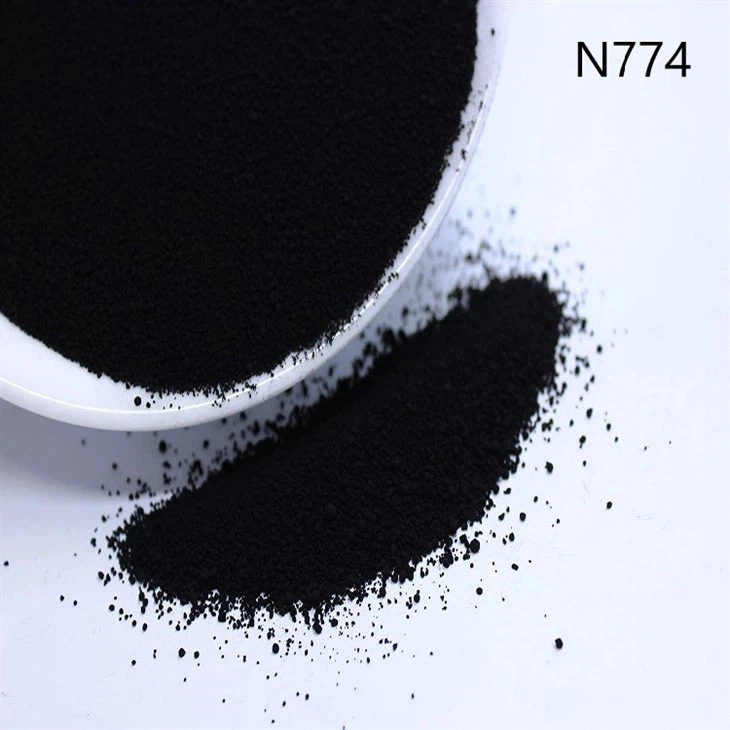
N774 carbon black has smaller specific surface area, higher oil dazzling and better dispersion properties, which makes it widely used in ink, coatings, plastics and other fields. The application of n774 carbon black in electronic materials and high-performance rubber has also shown good growth momentum.

$1500.00 | 0 metric tons (Min.Order)
Carbon black N110 can be used for off-road tires and truck tires, rubber pads for Bridges, conveyor belts and other rubber products requiring good wear resistance.

$1386.00 | 0 metric tons (Min.Order)
Model carbon black n220 is widely used in the rubber industry. Due to its excellent processing properties and strengthening capabilities, N220 carbon black is used as a filler and fortifying agent in rubber formulations.

$1257.00 | 0 metric tons (Min.Order)
N550 carbon black is a spherical granular carbon black product. It has a large specific surface area and adsorption capacity, which can enhance the mechanical strength and wear resistance of the material.
N774 carbon black is known for its excellent reinforcement and shear resistance. It can be used as a filler in rubber products and coatings, which can significantly improve the strength and durability of the product. For rubber products, n774 carbon black can enhance its hardness and wear resistance, making the product more durable and has a long service life. In coatings, n774 carbon black can provide excellent hiding power and color uniformity, making the coating more adhesive to various surfaces, so that the coating has better weather resistance and durability.
Benefits of N774 Carbon Black
Adjust ink color depth
The rich black color of carbon black allows the ink to produce highly saturated black. By adjusting the amount of carbon black added, the depth of the ink can be controlled to meet different printing needs.
Improve printing quality
The small size of carbon black particles helps increase the fluidity and solubility of ink, allowing the ink to evenly adhere to the surface of the printing material. This can achieve clear, sharp printing results and improve print quality.
Enhanced light resistance and durability
Carbon black has good light resistance and anti-oxidation properties, which can effectively prevent the ink from fading due to ultraviolet radiation or oxidation. At the same time, the addition of carbon black can also improve the water resistance and chemical corrosion resistance of the ink, extending the service life of the printed matter.
Adjust ink rheology
The rheology of the ink is critical to the printing process. The addition of carbon black can adjust the viscosity and flow characteristics of the ink, ensuring the stability and accuracy of the ink when jetting or applying.
Improve the texture of ink
The particle shape and surface structure of carbon black give the ink a certain three-dimensional sense and texture, making the text and patterns of the printed matter more vivid and increasing the visual effect.
Amorphous carbon black
Amorphous carbon black is usually produced by incomplete combustion of organic matter. Its structure is irregular and its surface area is large, so it is highly active for adsorption and reaction. Amorphous carbon black is widely used in rubber, ink, coating and other industries to enhance product performance.
Crystalline carbon black
In contrast, crystalline carbon black has a more ordered structure, with its crystals arranged more regularly. This type of carbon black is usually prepared under high temperature conditions and has high thermal stability and conductivity, so it is often used in batteries, conductive materials and other fields.

Application of N774 Carbon Black
Tires
Carbon black is used to improve the processing, strength and durability important to tire manufacturing and tire performance (most notably safety), increasing tire life and fuel economy.
Plastics
Carbon black provides color, UV protection and conductivity - power cable shielding or electrostatic dissipation - to plastics.
Batteries
Carbon black improves electrochemical conductivity and charging characteristics in lead-acid, modern stop-start, and hybrid batteries – improving overall battery efficiency.
Pipe
Carbon black serves to protect pipes from mechanical degradation caused by harmful UV radiation.
Wire and Cable
Carbon black extends cable life and efficiency by creating exceptionally smooth and conductive insulation, conductor shield and UV resistance.
High Performance Coatings
Carbon black provides jetness for coatings, degradation protection from UV radiation and conductivity for coatings.
Agricultural Irrigation, Mulch Films and Greenhouse Coverings
Carbon black enables more efficient and better farming through water management for irrigation, retention and UV protection.
Toner and Printing Inks
Carbon black provides pigmentation that enhances color and undertone in various ink applications.
Carbon
Carbon black is predominantly composed of carbon atoms, which give it its black color.
Hydrogen
Small amounts of hydrogen may be present in carbon black, originating from the hydrocarbons used in its production.
Oxygen
Oxygen may be present in trace amounts, resulting from the incomplete combustion process.
Sulfur
Some carbon black grades may contain low levels of sulfur, which can be a byproduct of the production process.
Ash
Carbon black may have small amounts of inorganic impurities referred to as ash. Ash content is typically low but can vary depending on the production method.
How to Choose N774 Carbon Black
Color Requirements
The first consideration when choosing a pigment carbon black is the desired color outcome. Determine the specific color characteristics you want to achieve, such as intensity, shade, and undertones. Different grades and types of pigment carbon black offer varying color profiles, so it's essential to select one that aligns with your product's color requirements.
Particle Size and Structure
Particle size and structure play a significant role in the dispersion and tinting strength of pigment carbon black. Finer particles generally provide better color development and higher tinting strength. However, it is important to note that excessively fine particles may affect viscosity and flow properties, potentially impacting the application process. Consider the balance between particle size and desired color performance for optimal results.
Surface Area
The surface area of the pigment carbon black affects its interaction with surrounding materials and influences properties like opacity and light-scattering abilities. The higher surface area typically enhances the color saturation and hiding power. However, increased surface area may also lead to higher viscosity and potential challenges in dispersion. Evaluate the surface area requirements based on the desired opacity and application characteristics of your product.
Dispersion Properties
The dispersion properties of the pigment carbon black are crucial for achieving uniform color distribution and stability in your end products. Look for carbon black grades that offer good dispersibility, enabling easy incorporation into various mediums. Efficient dispersion helps avoid issues like color streaking, flocculation, and poor color development. Consider the ease of dispersion and compatibility with your production processes when selecting a pigment carbon black.
Furnace Black Process
This method forms carbon black by blowing petroleum oil or coal oil as raw material (feedstock oil) into high-temperature gases to combust them partially. This method is suitable for mass production due to its high yield, and allows wide control over its properties such as particle size or structure. This is currently the most common method used for manufacturing.
Channel Process
This method forms carbon black by bringing partially combusted fuel, which is generated with natural gas as raw material, into contact with channel steel (H-shaped steel) and then collecting the carbon black which results.There are yield and environment issues around this method, and therefore has lost the leading role as the mass production process to the furnace process. This method, however, provides carbon black with many functional groups on the surface, being used in some painting applications.
Acetylene Black Process
This process obtains carbon black by thermally decomposing acetylene gas. It provides carbon black with higher structures and higher crystallinity, and is mainly used for electric conductive agents.
Lampblack Process
This method obtains carbon black by collecting soot from fumes generated by burning oils or pine wood.This method has been used since the days before Christ, and is not suitable for mass production. However, it is used as raw material for ink sticks as it provides carbon black with specific color.
Our Factory

Certificate


FAQ
Hot Tags: n774 carbon black, China n774 carbon black manufacturers, suppliers, factory, carbon black for remediation, carbon black for varieties, Carbon Black Used in Rubber, Carbon Black Material, Carbon Black N326, Carbon Black For Rubber


